Olga [GALANINA] tells us in her 10-minute video from late 2019:Why the criminal case regarding the deaths of the hikers near Mount Otorten had no number (2019-XII-7):
[–] Hello everyone, dear friends! In today's episode, you will learn why the criminal case concerning the deaths of the hikers near Mount Otorten had no number. Everyone is racking their brains over this question.
But there is no mystery here!
Yuri Kuntsevich continues to mess with our heads. He invited lawyer Yevgeny Chernousov—an attorney with the Moscow Bar Association who first donned an officer's uniform back in 1968. Remember that year!
Chernousov is a qualified lawyer. But I suspect there are things this man didn't know—things I am about to tell you.
Or perhaps Chernousov *does* know, but—at Kuntsevich's request (or for some other reason)—he isn't telling us what I am going to share with you today.
The grounds for initiating a criminal case are the existence of sufficient data indicating signs of a crime. If you see a corpse with a gunshot wound to the abdomen (or head) or a body with a knife in the heart, then there is sufficient data indicating signs of a crime.
But if you find a drunk person who has frozen to death in the forest, there is insufficient data indicating signs of a crime. Because the person could have frozen to death on their own, without anyone else’s involvement.
The grounds for initiating a criminal case arise when a prosecutor (or an investigator, inquiry officer, or inquiry agency) receives information about an act—either in preparation or already committed—that bears the hallmarks of a crime.
Petrov, the Prosecutor of the city of Astrakhan, identified—based on his own professional experience—typical instances where requests to initiate criminal proceedings were ultimately not substantiated.
These include:
1) reports of theft where, upon verification, the allegedly stolen item was found;
2) cases of suicide or the discovery of a body where there was no evidence of foul play;
3) reports of missing persons who were not found among the deceased or admitted to medical facilities;
4) a desire to intimidate someone who had caused offense;
5) seeking the assistance of law enforcement to locate lost property or resolve civil disputes.
It is not uncommon for a report to allege a crime, yet the likelihood of that crime having actually occurred requires verification. How should such situations be handled?
Everything I am discussing applies to the current situation. A pre-investigation check is essentially the verification of a report regarding a crime. What is its purpose? It is the stage that precedes the formal initiation of a criminal case.
The primary objective of a pre-investigation check is to determine whether the elements of a crime are present. This procedure is governed by Article 144 of the Code of Criminal Procedure. Many officials have the authority to conduct such checks. State agencies are reluctant to initiate criminal cases that might later have to be dismissed.
During the pre-investigation check stage, the investigator faces fewer constraints; the working conditions are more comfortable, and their actions are not unduly restricted. This prevents the initiation of unjustified proceedings for cases that have no prospect of success in court... After all, if a case has no chance of succeeding in court, there is no need to open it in the first place.
Let’s go back to 1959. A battered tent and the frozen bodies of hikers are found in a remote mountain location. There are no stab wounds to the heart, no gunshot wounds. What grounds would be sufficient here to initiate a criminal case?
Prosecutor Tempalov wasn't sure if the case had any real prospect of going to court. No one would let him officially open a criminal case and assign it a file number. He first had to conduct what is known today as a "pre-investigation inquiry." Only if evidence of a crime emerged—indicating that someone had killed them or was otherwise responsible for their deaths—could he assign a case number.
Let’s consult legal scholars to see if the concept of a "pre-investigation inquiry" even existed in 1959. To do this, I had to make another trip to the National Library of Russia...
The weather was like this: rain, but no snow.
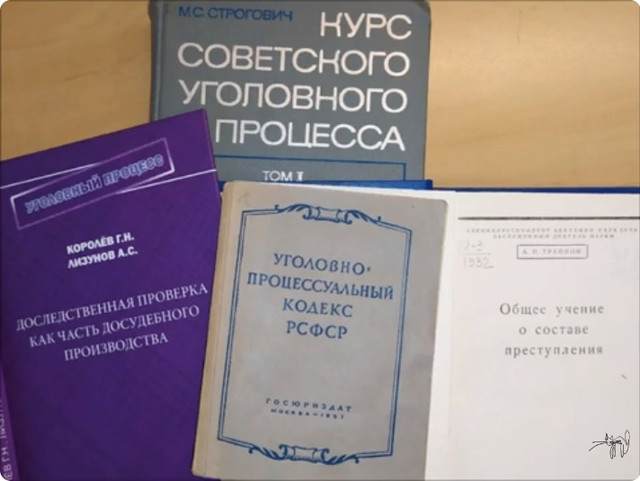
I requested four small books: three older ones (from the 1950s and 60s) and a fourth, purple one. That last one was the most valuable. The authors were Korolyov and Lizunov; the title was *Pre-Investigation Inquiry as Part of Pre-Trial Proceedings*.
They covered everything regarding pre-investigation inquiries in this monograph.
They discussed pre-investigation inquiries from the Tsarist era as well as those in foreign countries. Everything there is to know about the subject is in this monograph. In short, pages 56–59 contain the information relevant to that period.
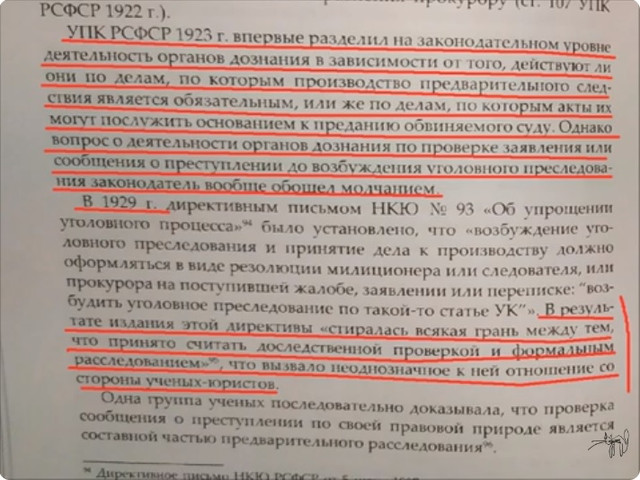
It’s a long read, so I’ll summarize it in my own words. We begin with the Code of Criminal Procedure of 1922.
In 1922, the conduct of a pre-investigation inquiry was not distinguished as a separate stage of criminal proceedings. The new Code of Criminal Procedure, adopted on February 15, 1923, introduced no significant changes to this procedure.
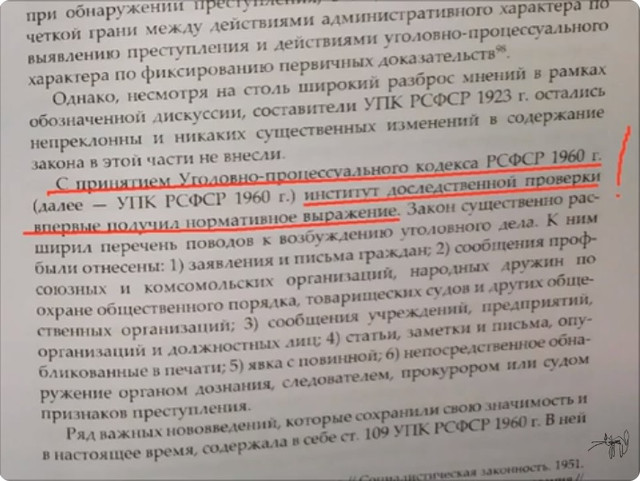
In other words, there was no such thing as a pre-investigation inquiry back then. The line between what is conventionally considered a pre-investigation inquiry and a formal investigation was blurred... The most important point is stated on page 59:
With the adoption of the 1960 Code of Criminal Procedure of the RSFSR, the concept of the pre-investigation inquiry was given a statutory basis for the first time.
In other words, the pre-investigation inquiry did not exist prior to 1960. If a report regarding the suspected murder of hikers was received and it was unclear whether the elements of a crime were present, a criminal case number could not be assigned until the investigator had determined whether such elements existed. After all, without the elements of a crime, it is clear the case would never make it to trial.
Ivanov and Tempalov spent that entire time looking for the elements of a crime and pursuing various theories, but they never found the necessary elements. That is why no case number was assigned. It makes perfect sense! It wasn't a criminal case because the elements of a crime were missing. This is what is now known as the verification of a crime report, or a pre-investigation inquiry. That explains the absence of a case number. However, in 1959, the pre-investigation inquiry did not exist.


 Topic: Why the criminal case had no number? (Read 17 times)