February 10, 2026, 03:31:41 AM
Dyatlov Pass Forum

Author Topic: Krivonischenko and Kolevatov Cut The Tent  (Read 176 times)

0 Members and 3 Guests are viewing this topic.

February 07, 2026, 10:49:29 AM
Read 176 times
Offline

lunarwoods


I believe it was Yuri Krivonischenko and Sasha Kolevatov who cut the tent. When examining the scene, there is a separation from the knives and their sheaths for these two men. Kolevatov's knife was found inside the tent, his knife sheath was found outside the tent with the scattered items leading to the footprints. Krivonischenko's knife was found in the ravine with the bodies, his knife sheath found inside the tent. This shows movement and activity happening with these knives as the group left the tent. I also find it interesting how Krivonischenko's film roll was found outside the tent while his camera was found on a makeshift tripod inside the tent.
 

February 07, 2026, 01:23:11 PM
Reply #1
Offline

Hunter


You're wrong. Kolevatov's knife and sheath were in the tent. Krivonischenko's knife was apparently found in a ravine. The sheath found in May belongs to an unknown person.

The fact that the May scabbard belongs to Krivonischenko is only an assumption based on an analysis of photographs and the text of the criminal case and radiogram.
« Last Edit: February 08, 2026, 01:10:43 PM by Hunter »
Нет лучше охоты, чем охота на человека. Кто познал охоту на вооружённых людей, и полюбил её, больше не захочет познать ни чего другого.
 

February 07, 2026, 03:11:52 PM
Reply #2
Offline

lunarwoods


No.. I will site my sources. Like I said, Krivo's knife was found inside the ravine separated from his sheath. Kolevatov's knife was also separated from the sheath.

In terms of where Krivonischenko's knife was found: "Stansislav Bogomolov (Discussing the ravine) Near the bodies, Krivonischenko's knife was found." He was working with Lev Ivanov to get this information. https://dyatlovpass.com/stanislav-bogomolov-1. In the resolution of the case, Ivanov states it was Krivonischenko's knife that was used to cut branches at the cedar tree and found at the bodies.

Kolevatov's knife and sheath, when inventoried at the Ivdel Airport on March 3 was found together. But when found at the actual scene, they were seperated because he said when he tried putting them together, they did not fit. So when he offered Kolevatov's sister the knife in return, he made her decide between the knife and the sheath. Also, the sheath was found outside the tent: "Ebonite sheath and a tablespoon of white metal were found under the snow at the location where the Dyatlov group tent was found." https://dyatlovpass.com/knives?lid=1
 

February 07, 2026, 03:34:34 PM
Reply #3
Online

Missi


The second link you cite states that Krivonishenko's knife was not found at all.
 

February 07, 2026, 05:51:43 PM
Reply #4
Offline

lunarwoods


The second link I provided is comments from Teddy, not from the source (Ivanov). She is summarizing general information whereas Ivanov clarifies this misconception after the case was closed.
 

February 08, 2026, 12:05:38 AM
Reply #5
Offline

Hunter


My apologies for the Google translation.
Teodora posted an article about the knives in the Dyatlov group on the website. I wrote it back then; you can read it.
The original, in Russian, is here:
http://svotrog1079.mybb.ru/viewtopic.php?id=79

In short, Krivonischenko's knife wasn't included in the four men's discovery report; there's no information about its discovery in a separate document—a report, memo, or protocol. Some researchers believe that the investigator created Krivonischenko's knife in the ravine to avoid any questions about who made the flooring and what it was made of.

Regarding the inventory of items in Ivdel, you're mistaken. The list of items in the storage locker simply includes a "Finnish knife." And Yudin identified the Finnish knife as belonging to Thibault, not Kolevatov. Among Kolevatov's belongings, only a sharpening whetstone was found.

The fact that Kolevatov's knife was in its sheath is mentioned on page 50 of the observation proceedings.

And the reason for the choice of "knife or sheath" may not have been because the knife and sheath were separate, but because at that time, a Finnish knife was a weapon requiring a permit. Therefore, the actual conversation might not have been, "I can return either the knife or the sheath," but rather, "I can return the sheath now, and the knife if you get a permit."
Нет лучше охоты, чем охота на человека. Кто познал охоту на вооружённых людей, и полюбил её, больше не захочет познать ни чего другого.
 
The following users thanked this post: Missi

February 08, 2026, 12:42:40 PM
Reply #6
Offline

lunarwoods


You say "At that time, a Finnish knife was a weapon requiring a permit. Therefore, the actual conversation might not have been, "I can return either the knife or the sheath," but rather, "I can return the sheath now, and the knife if you get a permit." I know... Sasha Kolevatov was the only hiker who did have a permit... So this shouldn't be an issue.

You keep referring to Teddy's posts but I am referencing Ivanov's claim that Krivonischenko's knife was found in the ravine, Teddy is stating general information that she had at the time but it doesn't include Ivanov's clarification. Basically, the second source is right about one thing but wrong about another. Since the sheath found outside the tent did not fit Kolevatov's knife then maybe this sheath was actually Krivonischenko's. Im not sure why you are trying to discredit me when you are the one who is incorrect here? The point was, these two men who shows activity with their knives. So if the tent was truly cut open by the hikers, it would make sense for it to be these two men. Or maybe only Krivonischenko.
« Last Edit: February 08, 2026, 01:01:41 PM by lunarwoods »
 

February 08, 2026, 12:59:36 PM
Reply #7
Offline

Hunter


Alexander didn't have a permit for a Finnish knife. I tried to find the original source. The earliest mention of a knife permit issued to Alexander Kolevatov was in Rakitin's work. But he didn't provide any evidence of Alexander having a permit for a Finnish knife. As for what wouldn't be a problem? After the owner's death, weapons covered by the permit system must be confiscated for safekeeping, and heirs can only get them back after obtaining documents granting the right to carry and store weapons. Without this, the weapon won't be returned.

I'm not referencing Teddy's posts. If you're aware, in a criminal case, evidence obtained illegally is considered null and void. That is, nonexistent. So, from a legal perspective, Krivonischenko's knife was never found. Moreover, none of the searchers who participated in the discovery of the bodies of the last four recalled the knife being there. Some researchers, particularly those whose work is related to the law, claim that Krivonischenko's knife was simply invented by Ivanov in the decision to close the criminal case, to explain the presence of the matting, the cut tent, and the cut items.
Нет лучше охоты, чем охота на человека. Кто познал охоту на вооружённых людей, и полюбил её, больше не захочет познать ни чего другого.
 

February 08, 2026, 01:04:38 PM
Reply #8
Offline

lunarwoods


Here might be the discrepancy: It may not have even been a Finnish knife at all. According to Elena Kolevatova, it is a kitchen knife, it was in the family for a long time. So, perhaps the reason why a permit was not given to him was because maybe one was never needed? Would this knife even need to be regulated? Ivanov stated he did not give both to Rimma Kolevatova because it did not fit in its sheath, he mentions nothing of a permit being needed. And the issue with the sheath was that apparently Kolevatov's sheath should have been leather, not ebonite like the one found outside the tent. Thats why I wonder if this sheath was actually Krivonischenkos.
« Last Edit: February 08, 2026, 01:14:46 PM by lunarwoods »
 

February 08, 2026, 01:08:05 PM
Reply #9
Offline

Hunter


The receipt shows the date of receipt of the permit, which was issued to Rimma Kolevatova, not Alexander. It doesn't include Alexander's permit details.

There's no information in letters from Alexander's relatives (not paraphrased, but available scanned or reprinted texts) that Alexander had permission. Moreover, have you seen the knife that's being marketed as the very knife from the tent?

May I ask you, what country are you from?
« Last Edit: February 08, 2026, 01:13:38 PM by Hunter »
Нет лучше охоты, чем охота на человека. Кто познал охоту на вооружённых людей, и полюбил её, больше не захочет познать ни чего другого.
 

February 08, 2026, 01:21:42 PM
Reply #10
Offline

lunarwoods


Here might be the discrepancy: It may not have even been a Finnish knife at all. According to Elena Kolevatova, it is a kitchen knife, it was in the family for a long time. So, perhaps no permit would even be needed? Would this knife even need to be regulated? Is it the same type of knife as Krivo and Tibo's? Ivanov stated he did not give both to Rimma Kolevatova because it did not fit in its sheath, he mentions nothing of a permit being needed. And the issue with the sheath was that apparently Kolevatov's sheath should have been leather, not ebonite like the one found outside the tent. Thats why I wonder if this sheath was actually Krivonischenkos.

Im re-reading the letters from Elena here: https://dyatlovpass.com/aleksander-kolevatov-3. Let me know what you think of this
« Last Edit: February 08, 2026, 01:29:00 PM by lunarwoods »
 
The following users thanked this post: Hunter

February 08, 2026, 01:30:34 PM
Reply #11
Offline

Hunter


The fact is that in the USSR, the term "Finnish knife" was used to refer to many more types of knives than actually existed. And although Kolevatov's knife may have been as similar to Finnish knives as black people are to Eximos, it could have been classified as Finnish in the USSR at that time.
We don't know how the conversation between Ivanov and Rimma unfolded. Or how Rimma could have recounted it. I've often encountered situations where, while the general narrative seems accurate, a closer look reveals a different story. Considering that Kolevatov's knife was listed in the criminal case as Finnish, Ivanov couldn't simply return it—illegally transferring a bladed weapon carried a prison sentence of up to five years at the time. And just because a knife was used in everyday life and in the kitchen doesn't mean it ceases to be a weapon.
Нет лучше охоты, чем охота на человека. Кто познал охоту на вооружённых людей, и полюбил её, больше не захочет познать ни чего другого.
 

February 08, 2026, 01:41:58 PM
Reply #12
Offline

Hunter


What do I think about the sheath found in May? It's highly likely that it belonged to Krivonischenko. At least based on the parameters stated in the criminal case materials, radiograms, and available photographs of Krivonischenko.

I read both the letters to Maya Piskareva (scans) and their retellings. In the latter case, one must be wary of claims. Sometimes, when retelling, people add things that weren't in the text but were previously heard from another source.

The fact that the knife was used as a household knife is unquestionable. On hikes, a knife is used for everyday tasks—setting up camp, preparing food. But there is a difference in how an object is used and how the law views it.

To understand how far the definition of a Finnish knife was in the USSR, look at the Randall Model 8 knife. It's far removed from Finnish knives in both its place of manufacture and its appearance. But in the USSR, it was recognized as a Finnish knife. And this was confirmed in the verdict of the pilot Francis Powers, who was shot down over the Urals.
« Last Edit: February 08, 2026, 01:48:53 PM by Hunter »
Нет лучше охоты, чем охота на человека. Кто познал охоту на вооружённых людей, и полюбил её, больше не захочет познать ни чего другого.
 

February 08, 2026, 01:55:46 PM
Reply #13
Online

Axelrod


Former Judge Ankudinov often repeats the idea that Ivanov invented the knife, since the knife is missing from Tempalov's report of May 6, 1959,
but then the knife appeared in the decision to terminate the criminal case at the end of May (both draft and final copy).
I'd say that Ankudinov views this world very bureaucratically, or is simply creating unnecessary sensations. It's more like the first option.
In my opinion, Aknudinov is simply terrible in his reasoning.

In fact, if you look at the letters of Deyev, who supposedly was familiar with the secret case, you can see that a KGB investigator (possibly Ortyukov) worked alongside Tempalov, and it describes how a knife with a wooden handle, made from a diamond-shaped file, was found in a ravine.

This detail is very interesting. The diamond shape is ideal for making a knife. I don't have a scrap of such files. But you can buy it at a store.
It's possible the knife was found in the snow after Tempalov's visit, which is why it's not listed in the records.
Since the USSR was a totalitarian state, for some reason, the sale of criminal knives was banned in stores until around 1996 (I actually had one in 1995), but someone could have made such knives illegally from solid metal blanks, like in a forge.

My father often stipulated that a knife could have a certain edge size.
In particular, my father made cutters from an iron saw.

I consider a file to be a more valuable item than a knife, so the idea of ​​making a less valuable item seems very strange. This process is also labor-intensive.
However, Vladimir Vysotsky's famous song "Ballad of Childhood" mentions such a situation.

The scabbard was found on May 5th at the site of a dismantled tent, after the snow melted, one mile from the cedar.
Student Mokhov describes it as a black ebonite scabbard in an interview.
Ortyukov writes in a radiogram that the scabbard presumably belongs to Kolevatov, describing the material as textolite, a mistake that is often repeated.

Perhaps Ortyukov remembers that Kolevatov's knife was found in February-March.
Moreover, the scabbard is considerably larger than a kitchen knife blade (18 cm).
Ivanov told Rimma Kolevatova that he could return either the knife or the scabbard.
After interviewing Kolevatova, Maya Piskareva suggests that the knife and scabbard are not the same size. I agree with her.

In Tempalov's report, the textolite scabbard is again transformed into ebonite. I discussed this on a Russian forum in 2022. But I don't remember what they told me.

The story of how much permission Kolevatov had for the knife doesn't interest me.
We had homemade knives at home, and none of us were punished for it.
The ban was lifted in 1996, but in reality, such knives were already being sold in Moscow by 1995.
 

February 08, 2026, 02:04:26 PM
Reply #14
Offline

Hunter


Ankudinov is right de jure. De facto, the knife could have been found later. But there are serious problems with knives in a criminal case.
Next, regarding the knives. In my article, I outlined the parameters by which the sheath could have belonged to Krivonischenko. I can provide a link to the article. You won't need a translation; for the rest, Google Translate will help.

The sale of knives wasn't prohibited, but rather restricted. The ban on Finnish knives was introduced to quickly crack down on street crime. And it remains in place. You could buy a knife in a store that was considered a bladed weapon if you had a permit from law enforcement. This permit was issued to hunters. In some areas, locals could carry bladed weapons without a permit.

Illegal knives were made from anything. The most common materials (blanks) were files, springs, saw blades, and bearing races. Moreover, the knives weren't necessarily made for the purpose of committing crimes.
Нет лучше охоты, чем охота на человека. Кто познал охоту на вооружённых людей, и полюбил её, больше не захочет познать ни чего другого.
 

February 08, 2026, 02:09:00 PM
Reply #15
Offline

Hunter


Here's my article, which Theodora translated into English.

https://dyatlovpass.com/knives-2?rbid=18461
Нет лучше охоты, чем охота на человека. Кто познал охоту на вооружённых людей, и полюбил её, больше не захочет познать ни чего другого.
 

February 08, 2026, 02:13:28 PM
Reply #16
Offline

lunarwoods


Thank you for clarifying the Finnish knife, now I understand that none of the hikers had a permit. But I am still not seeing any clarification that Kolevatov's knife was found inside the sheath when the search party actually encountered the tent. I know that they were found together when inventoried, but that is not important. Were they together when the hikers left the tent? The narrative I have always read was that the knife and sheath were separated, however I agree that the sheath found was most likely Krivonischenkos. I want to clarify if this makes Kolevatov's actual knife sheath unaccounted for.
 

February 08, 2026, 02:17:14 PM
Reply #17
Offline

lunarwoods


https://dyatlovpass.com/knives-2?rbid=18461 This page is very helpful and breaks it down very well, thank you!
 

February 08, 2026, 02:24:21 PM
Reply #18
Offline

Hunter


Unfortunately, Tempalov failed to carry out one of the most important tasks of a crime scene investigator: taking photographs of the tent and its contents. Kolevatov's knife was found in the tent, but the question is who did it. Was it Slobtsov and Sharavin, or other searchers before Tempalov's arrival? Interestingly, none of the searchers who participated in dismantling the tent or its recovery testified about the knife, sheathed or not. Which is odd. I have a possible explanation, but it casts a shadow on the searchers.
Нет лучше охоты, чем охота на человека. Кто познал охоту на вооружённых людей, и полюбил её, больше не захочет познать ни чего другого.
 
The following users thanked this post: Missi

February 08, 2026, 02:33:29 PM
Reply #19
Offline

lunarwoods


Well here is why I wanted to make this post.. It has to do with my thoughts on the Dyatlov Pass article originally titled: "A forensic expert on the Dyatlov Pass mystery: "If they weren't Phystech students, they'd still be alive." Source: https://dyatlovpass.com/elena-koskina-2?rbid=18461

"Lev Ivanov believed the fireball theory until the end of his days. This was passed on to Vozrozhdenniy. The actual atomic bomb explosions and their consequences were hammered into the minds of the Phystech students in their curricula. The explosions over Hiroshima and Nagasaki in 1945 were the most common examples. According to Ivanov, the Dyatlov group (the two who were outside the tent) mistook the fireballs for an atomic explosion and caused a panic. The Phystech students knew the consequences of these explosions better than anyone else, and by the time they emerged from the tent, the fireballs had already flown over the horizon. But the aftereffects of the panicked screams continued to trigger panic, and the group rushed down the slope, away from what they thought was the radiation."

If it was Krivonischenko and Kolevatov, the Phystech students, who cut the tent.. then I think it could explain why its these two specifically causing the panic to leave the tent immediately. The fireballs could have triggered an immediate panic for them if they believed this to be atomic testing. This is why I am trying to show the importance of why Krivonischenko and Kolevatov specifically are the only hikers who show a seperation of their knife and the sheath, because it validates this version. I personally believe the fireballs, whatever they may be, plays a critical role of why the group left their tent that night.
 

February 08, 2026, 02:38:30 PM
Reply #20
Offline

Hunter


We can't say for sure about the separation of the knives and sheaths. Furthermore, in Sheet 50 of the supervisory proceedings, the phrase "knife with leather knives" implies that the knife was in its sheath when it was discovered. The idea that the sheath found in May belonged to Krivonischenko is merely a guess, given that the description of the sheath in the criminal case and the radiogram matches photographs of Krivonischenko's sheath.
Нет лучше охоты, чем охота на человека. Кто познал охоту на вооружённых людей, и полюбил её, больше не захочет познать ни чего другого.
 

February 08, 2026, 02:54:12 PM
Reply #21
Offline

lunarwoods


Oh interesting, because when Tempalov states "Near the cuts of lard i found a big knife" and the protocal sheet Sheet 50 of the items states "Finnish knife WITH a leather sheath" Also, Ivanov stating that he could not get the sheath to fit the knife. I always interpreted this as indicating Kolevatov's knife sheath and knife were separated. Or that he implies it. For example with Tibo's knife, the search party specified the knife and sheath was found together.
 

February 08, 2026, 06:36:04 PM
Reply #22
Online

Missi


Well here is why I wanted to make this post.. It has to do with my thoughts on the Dyatlov Pass article originally titled: "A forensic expert on the Dyatlov Pass mystery: "If they weren't Phystech students, they'd still be alive." Source: https://dyatlovpass.com/elena-koskina-2?rbid=18461

"Lev Ivanov believed the fireball theory until the end of his days. This was passed on to Vozrozhdenniy. The actual atomic bomb explosions and their consequences were hammered into the minds of the Phystech students in their curricula. The explosions over Hiroshima and Nagasaki in 1945 were the most common examples. According to Ivanov, the Dyatlov group (the two who were outside the tent) mistook the fireballs for an atomic explosion and caused a panic. The Phystech students knew the consequences of these explosions better than anyone else, and by the time they emerged from the tent, the fireballs had already flown over the horizon. But the aftereffects of the panicked screams continued to trigger panic, and the group rushed down the slope, away from what they thought was the radiation."

If it was Krivonischenko and Kolevatov, the Phystech students, who cut the tent.. then I think it could explain why its these two specifically causing the panic to leave the tent immediately. The fireballs could have triggered an immediate panic for them if they believed this to be atomic testing. This is why I am trying to show the importance of why Krivonischenko and Kolevatov specifically are the only hikers who show a seperation of their knife and the sheath, because it validates this version. I personally believe the fireballs, whatever they may be, plays a critical role of why the group left their tent that night.

I don't see how students, especially when the pictures of the actual atomic bombs explosions were "hammered into [their] minds" could mistake anything other than the characteristic explosions for atomic bombs and panic. Whatever those lights might have been, they are described completely different from anything that resembles an atomic explosion.
And IF they really believed, they were caught in an atomic explosion, I don't actually see, how they could have believed, that leaving their tent might help them.
Care to elaborate?

As for the knifes, I'm pretty sure I read somewhere on this site, that at least one of them had build their "Finnish knife" on their own and not bought it, and that building ones own knife was pretty common back then.

Unfortunately, Tempalov failed to carry out one of the most important tasks of a crime scene investigator: taking photographs of the tent and its contents. Kolevatov's knife was found in the tent, but the question is who did it. Was it Slobtsov and Sharavin, or other searchers before Tempalov's arrival? Interestingly, none of the searchers who participated in dismantling the tent or its recovery testified about the knife, sheathed or not. Which is odd. I have a possible explanation, but it casts a shadow on the searchers.

I'd really love to read your explanation?
 

February 08, 2026, 07:33:39 PM
Reply #23
Offline

lunarwoods


It really just depends on what those fireballs are. There could be atmosphere/weather testing, they could be drones, flares, missiles, rockets. It could be a strange astral phenomenon that is localized to only that area. Without this clarity, it is hard to understand why the Dyatlov Group would make the decisions they did. The group would not walk towards a disaster, so IF the fireballs were present that night, I would imagine it would be somewhere in the valley and the group decided to get away from the area. This makes perfect sense if those fireballs were too close for comfort. It is late in the night and these strange fireballs are only hundreds of meters from their desolate and exposed tent, and they would not have understood what they are. This is one of the few scenarios that matches the scene: an immediate SOS emergency that leaves no markings on the ground. But that rules out any artillery or weapons testing. So I lean more towards rockets- either meteorockets (like suggested in the radiograms) or possibly low level military grade rockets. This a group of engineers, 2 nuclear scientists and a veteran, and they are encountering something unstable and unknown to them, there would be panic regardless of what those fireballs are.
Well here is why I wanted to make this post.. It has to do with my thoughts on the Dyatlov Pass article originally titled: "A forensic expert on the Dyatlov Pass mystery: "If they weren't Phystech students, they'd still be alive." Source: https://dyatlovpass.com/elena-koskina-2?rbid=18461

"Lev Ivanov believed the fireball theory until the end of his days. This was passed on to Vozrozhdenniy. The actual atomic bomb explosions and their consequences were hammered into the minds of the Phystech students in their curricula. The explosions over Hiroshima and Nagasaki in 1945 were the most common examples. According to Ivanov, the Dyatlov group (the two who were outside the tent) mistook the fireballs for an atomic explosion and caused a panic. The Phystech students knew the consequences of these explosions better than anyone else, and by the time they emerged from the tent, the fireballs had already flown over the horizon. But the aftereffects of the panicked screams continued to trigger panic, and the group rushed down the slope, away from what they thought was the radiation."

If it was Krivonischenko and Kolevatov, the Phystech students, who cut the tent.. then I think it could explain why its these two specifically causing the panic to leave the tent immediately. The fireballs could have triggered an immediate panic for them if they believed this to be atomic testing. This is why I am trying to show the importance of why Krivonischenko and Kolevatov specifically are the only hikers who show a seperation of their knife and the sheath, because it validates this version. I personally believe the fireballs, whatever they may be, plays a critical role of why the group left their tent that night.

I don't see how students, especially when the pictures of the actual atomic bombs explosions were "hammered into [their] minds" could mistake anything other than the characteristic explosions for atomic bombs and panic. Whatever those lights might have been, they are described completely different from anything that resembles an atomic explosion.
And IF they really believed, they were caught in an atomic explosion, I don't actually see, how they could have believed, that leaving their tent might help them.
Care to elaborate?

As for the knifes, I'm pretty sure I read somewhere on this site, that at least one of them had build their "Finnish knife" on their own and not bought it, and that building ones own knife was pretty common back then.

Unfortunately, Tempalov failed to carry out one of the most important tasks of a crime scene investigator: taking photographs of the tent and its contents. Kolevatov's knife was found in the tent, but the question is who did it. Was it Slobtsov and Sharavin, or other searchers before Tempalov's arrival? Interestingly, none of the searchers who participated in dismantling the tent or its recovery testified about the knife, sheathed or not. Which is odd. I have a possible explanation, but it casts a shadow on the searchers.

I'd really love to read your explanation?
Well here is why I wanted to make this post.. It has to do with my thoughts on the Dyatlov Pass article originally titled: "A forensic expert on the Dyatlov Pass mystery: "If they weren't Phystech students, they'd still be alive." Source: https://dyatlovpass.com/elena-koskina-2?rbid=18461

"Lev Ivanov believed the fireball theory until the end of his days. This was passed on to Vozrozhdenniy. The actual atomic bomb explosions and their consequences were hammered into the minds of the Phystech students in their curricula. The explosions over Hiroshima and Nagasaki in 1945 were the most common examples. According to Ivanov, the Dyatlov group (the two who were outside the tent) mistook the fireballs for an atomic explosion and caused a panic. The Phystech students knew the consequences of these explosions better than anyone else, and by the time they emerged from the tent, the fireballs had already flown over the horizon. But the aftereffects of the panicked screams continued to trigger panic, and the group rushed down the slope, away from what they thought was the radiation."

If it was Krivonischenko and Kolevatov, the Phystech students, who cut the tent.. then I think it could explain why its these two specifically causing the panic to leave the tent immediately. The fireballs could have triggered an immediate panic for them if they believed this to be atomic testing. This is why I am trying to show the importance of why Krivonischenko and Kolevatov specifically are the only hikers who show a seperation of their knife and the sheath, because it validates this version. I personally believe the fireballs, whatever they may be, plays a critical role of why the group left their tent that night.

I don't see how students, especially when the pictures of the actual atomic bombs explosions were "hammered into [their] minds" could mistake anything other than the characteristic explosions for atomic bombs and panic. Whatever those lights might have been, they are described completely different from anything that resembles an atomic explosion.
And IF they really believed, they were caught in an atomic explosion, I don't actually see, how they could have believed, that leaving their tent might help them.
Care to elaborate?

As for the knifes, I'm pretty sure I read somewhere on this site, that at least one of them had build their "Finnish knife" on their own and not bought it, and that building ones own knife was pretty common back then.

Unfortunately, Tempalov failed to carry out one of the most important tasks of a crime scene investigator: taking photographs of the tent and its contents. Kolevatov's knife was found in the tent, but the question is who did it. Was it Slobtsov and Sharavin, or other searchers before Tempalov's arrival? Interestingly, none of the searchers who participated in dismantling the tent or its recovery testified about the knife, sheathed or not. Which is odd. I have a possible explanation, but it casts a shadow on the searchers.

I'd really love to read your explanation?
« Last Edit: February 09, 2026, 03:05:23 AM by lunarwoods »
 

February 08, 2026, 11:03:38 PM
Reply #24
Offline

Hunter


Missi, in the USSR after the war, knife production was criticized for the quality of the steel and the variety of products. My grandfather used to say that if you bought a knife with good steel at a hardware store, you should run and buy a lottery ticket before your luck runs out. So people sometimes made their own knives or ordered them from friends who made them themselves or knew someone who did. There were no uniform requirements for which knives were considered weapons and which were not. In other words, virtually any homemade knife could be considered a bladed weapon. Incidentally, German tourist knives from the German Democratic Republic were very popular in the USSR. They were even called GDR finkas.

If you're interested, I have a scanned copy of the article "On the Examination of Bladed Weapons" from 1956, but you need to know Russian to translate it correctly; Google Translate sometimes mistranslates terms, phrases, and abbreviations.

Kolevatov's knife, judging by the photographs, appears to be a homemade knife, practically made on the fly. The blade from a power saw (not a chainsaw) was used as the starting material.
Photos of possible "donors":

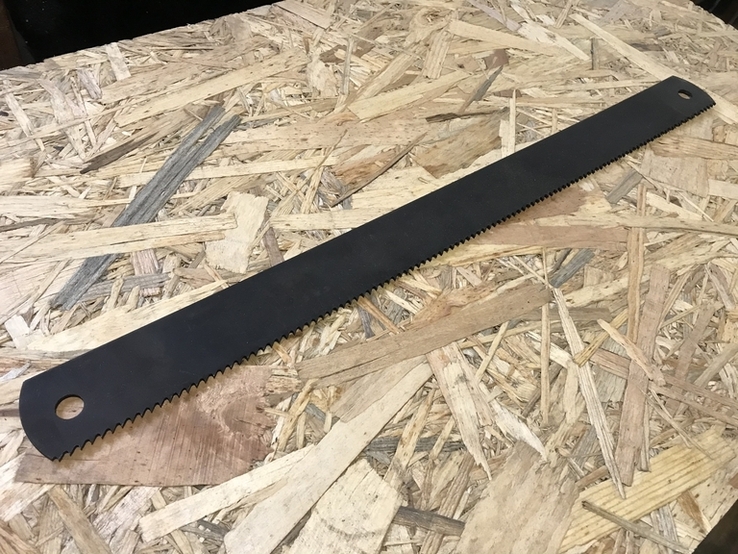

Krivonischenko's knife, according to Deyev, was made from a file. This tool was one of the most popular materials for making knives. I'll say right away that, judging by the photographs, at least the handle is homemade.

The Thibault-Brignole knife. Could also have been homemade.

As for Kolevatov's knife? Why isn't it listed in the tent search report or the inventory of belongings? It wasn't present during Yudin's inspection of belongings, and why didn't any of the searchers who inspected the tent and testified remember it? Only Tempalov later remembered it. Slobtsov and Sharavin found the tent and brought some items from the tent as evidence, which, incidentally, was recorded. Just so you understand, testimony given in the record is very difficult to retract. It's the equivalent of sworn testimony in the US. Furthermore, if you contradict the testimony given in the record, you can be fined, or even prosecuted. They didn't provide a precise list of what they brought. Therefore, Kolevatov's knife could have been among the items taken. Therefore, none of those who inspected the tent after Slobtsov and Sharavin saw the knife. They only remembered the knife after the items were already in Ivdel, which is why Yudin didn't see it.

Another possibility, which, incidentally, is indirectly supported by other materials in the criminal case, is that the knife could have been kept "as a souvenir," as happened with Dyatlov's flashlight. But Tempalov pressured the person who took the knife, and it was returned to him. Tempalov took no action on this matter.
Нет лучше охоты, чем охота на человека. Кто познал охоту на вооружённых людей, и полюбил её, больше не захочет познать ни чего другого.
 

February 08, 2026, 11:07:09 PM
Reply #25
Offline

Hunter


Oh interesting, because when Tempalov states "Near the cuts of lard i found a big knife" and the protocal sheet Sheet 50 of the items states "Finnish knife WITH a leather sheath" Also, Ivanov stating that he could not get the sheath to fit the knife. I always interpreted this as indicating Kolevatov's knife sheath and knife were separated. Or that he implies it. For example with Tibo's knife, the search party specified the knife and sheath was found together.

As far as I remember, Ivanov didn't say that the sheath found in May didn't match Kolevatov's knife.
The finding of Thibault's knife in a sheath is simply a logical assumption – no one would carry a fixed-blade knife without a sheath or sheath. Considering how Thibault carried the knife and where it was found, the sheath was 100% expected to be there.
Нет лучше охоты, чем охота на человека. Кто познал охоту на вооружённых людей, и полюбил её, больше не захочет познать ни чего другого.
 

February 09, 2026, 03:33:52 AM
Reply #26
Online

Axelrod


I'm surprised that the inventory lists an insufficient number of spoons and toothbrushes.
It seems that only Zolotarнщv, Kolmogorova, and Dubinina had toothbrushes.
Because Zolotaryov already had problems with his teeth, Zina and Lyuda were girls.

While the toothbrush issue can be explained by the fact that they didn't brush their teeth during the hike, the spoon issue is downright strange.
It's hard to imagine them eating porridge with spoons, one at a time.
Overall, the lack of knives isn't the strangest omission in this inventory.

The conclusion is that the inventory lists a huge number of items (including a weather and body thermometer), and a large number of items are mixed up in their intended use.
One can assume that they spilled mercury in the tent and therefore wanted to abandon it.

As for the knives, an insufficient number is quite normal. Only if the hunters caught a boar, then everyone needs a knife, but to cut the sleb, one knife is enough.
 

February 09, 2026, 03:41:40 AM
Reply #27
Offline

Hunter


The lack of a set of dishes can be explained by how things were packed out of the tent. Let me remind you that one spoon was found in May.
Нет лучше охоты, чем охота на человека. Кто познал охоту на вооружённых людей, и полюбил её, больше не захочет познать ни чего другого.
 

February 09, 2026, 05:52:35 AM
Reply #28
Online

Axelrod


Well, in the end we have a situation - two spoons, two passports, two cameras, two diaries, two knives, one sheet, three toothbrushes.
 

February 09, 2026, 12:25:50 PM
Reply #29
Online

Axelrod


I'm very sorry, but I got the information about the two spoons from the object identification page.

https://dyatlovpass.com/case-files-233-257-ru

The spoons' owners were Thibeaux-Brignolle and Kolevatov. No one else among relatives received the spoons.

Seven spoons were found in March:

https://dyatlovpass.com/case-files-11-20-ru

and then one spoon was found in May. Only one spoon is absent,

But the question arises: why are the five spoons missing?

The information about the spoons' return correlates with the information about the knives.
If the five spoons were hidden, then the five knives could have been similarly hidden.

Utensils: spoons - 7, mugs - 5, aluminum cups - 3,

P.S. 7+1=8 <9, 5+3=8 <9
Why isn't there a ninth spoon and a ninth mug for the nine tourists?
The obvious conclusion is this: Zolotaryov left the group (also we have only 8 footprints), took one spoon and one mug, and another person was thrown into the ravine in his place.
« Last Edit: February 09, 2026, 12:35:13 PM by Axelrod »
